
Termite Swarmers in Your House: What They Mean and What to Do
Seeing termite swarmers in house during Virginia spring? Distinguish flying ants from wood-destroying termites. Call (321) 496-4080 for an audit.
If you find termite swarmers inside your house, it indicates an established subterranean termite colony is actively tunneling and feeding within your structural foundation or framing timbers. Immediately collect several specimen wings in a sealed plastic bag for identification, vacuum up loose insects, avoid spraying over-the-counter insecticides that scatter workers, and contact a licensed pest professional for a full crawl space and subfloor inspection.
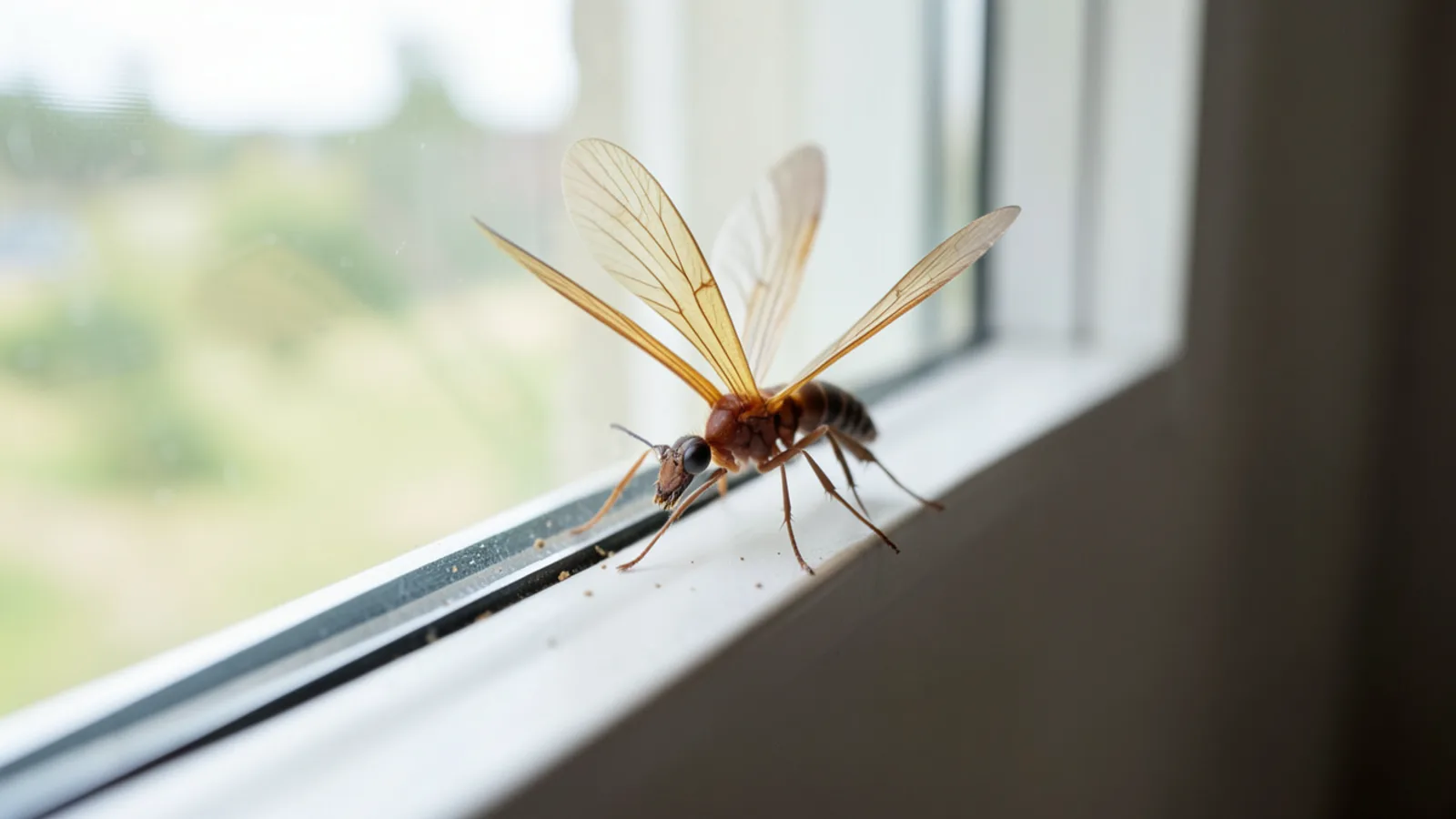
Every spring between late March and mid-May, homeowners across Midlothian, Bon Air, and Chesterfield County experience a sudden, alarming sight: dozens or hundreds of dark, winged insects abruptly emerge inside their living room, fluttering frantically around sunny windows, sliding glass patio doors, and overhead lighting fixtures.
Within a few short hours, the swarmers shed their wings and die, leaving small piles of translucent, silvery wings scattered across windowsills, baseboards, and hardwood floors. This natural event is a subterranean termite swarm. Discovering swarmers **inside** your finished living space is one of the most definitive diagnostic indicators of an active, established structural infestation beneath your floors.
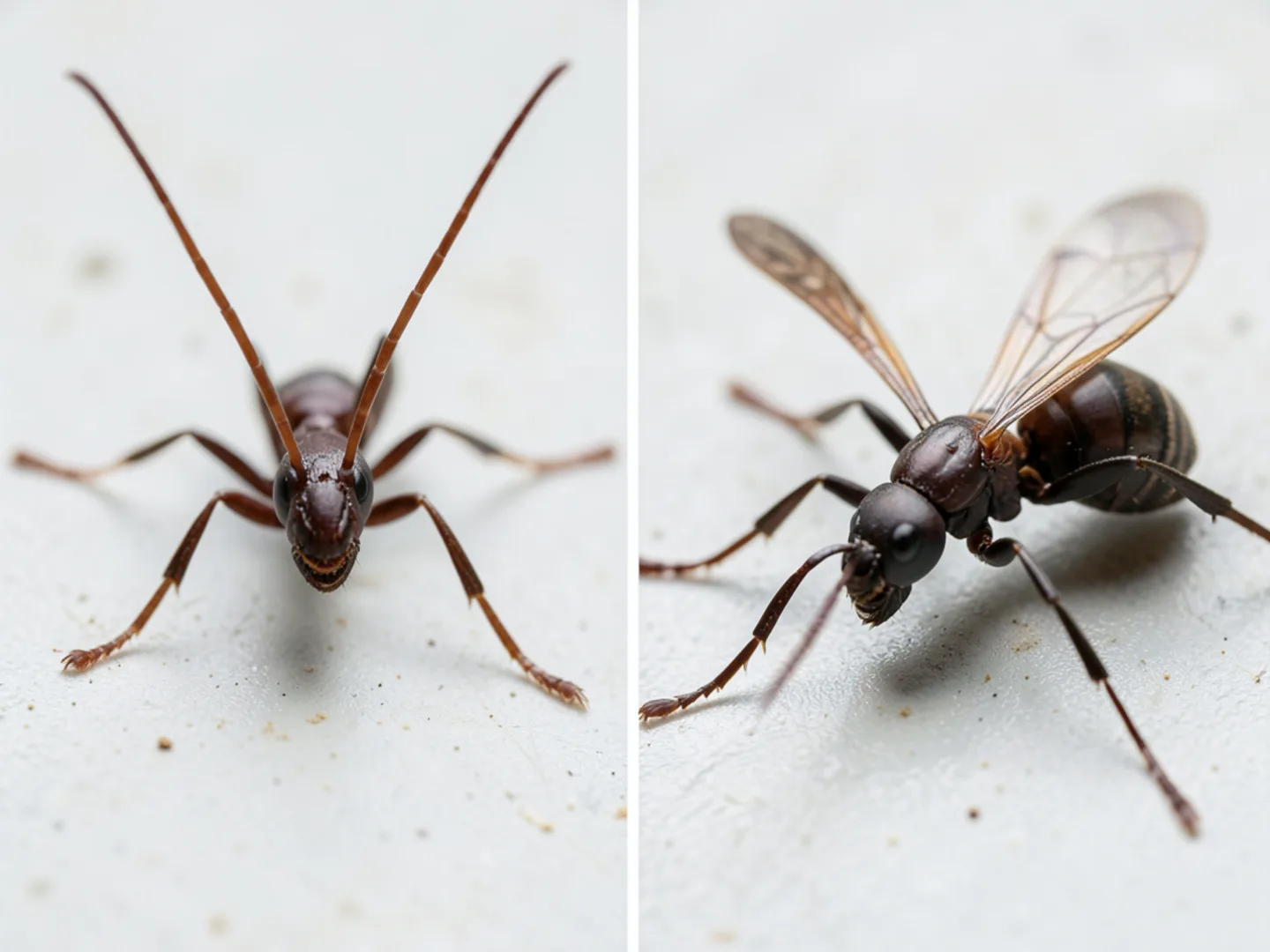
Termite Swarmer vs. Flying Ant: How to Tell the Difference Before panicking, verify whether the insects are subterranean termite reproductive alates or harmless winged reproductive ants. While they appear similar to the untrained eye, three distinct anatomical characteristics separate them under close inspection:
| Physical Feature | Subterranean Termite Swarmer (*Reticulitermes*) | Flying Ant (*Formicidae* Family) |
|---|---|---|
| **Waist Shape** | Broad, cylindrical waist with no visible constriction | Narrow, distinctly pinched "hourglass" waist |
| **Wing Morphology** | 4 wings of completely equal size, shape, and delicate veining | 2 large front wings and 2 noticeably smaller hind wings |
| **Antennae** | Straight, beaded like a string of microscopic pearls | Elbowed, with a distinct 90-degree bent joint |
| **Wing Detachment** | Wings shed easily upon landing; loose wings found in piles | Wings remain firmly attached to the thorax throughout life |
| **Body Pigment** | Solid coal-black to dark brown body | Variable: reddish-brown, jet black, or two-toned |
If the insects have wings twice their body length that detach at the slightest touch, you are looking at subterranean termite swarmers.
What Indoor Swarmers Actually Signify Subterranean termites (*Reticulitermes flavipes*) live in massive subterranean colonies consisting of up to hundreds of thousands of individual workers, soldiers, and reproductives. A termite colony requires three to five years of mature development before it accumulates the surplus population needed to produce winged reproductive alates.
During the year, sterile pale worker termites feed silently on structural wood, traveling through humid subterranean tunnels and mud shelter tubes. When warm 70-degree temperatures arrive following soaking spring rains, the mature colony releases hundreds of winged reproductives to mate and establish new colonies.
If swarmers are discovered outdoors on a rotting pine stump or landscape timber 50 feet away from your home, it simply indicates natural outdoor activity. However, if swarmers emerge **inside your house**—from behind baseboards, out of electrical outlet faceplates, around firebox hearths, or through crawl space access doors—the colony has already penetrated your foundation. The termites are actively feeding on your subfloor joists, mud sills, or wall framing timbers.
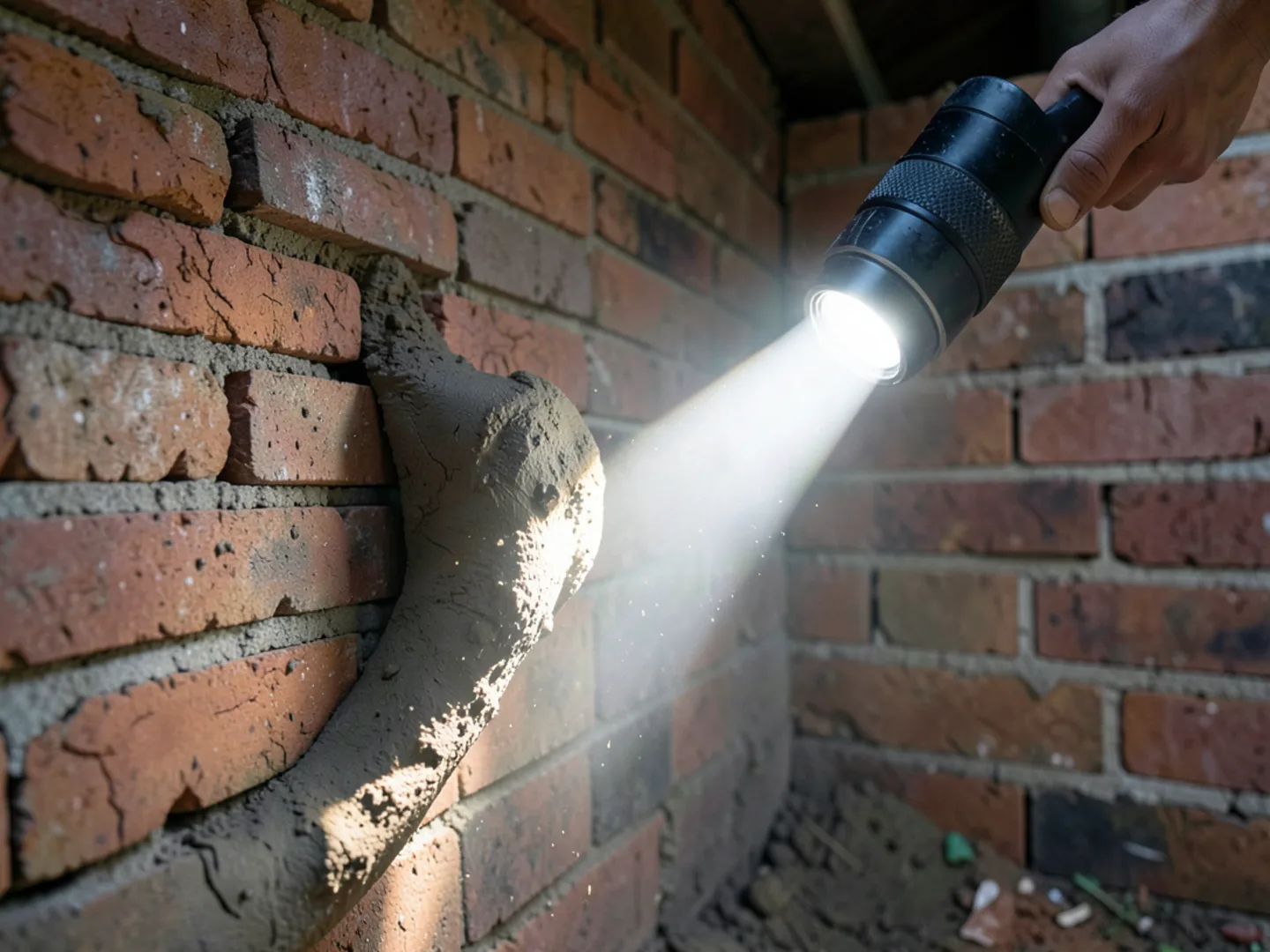
Immediate Action Steps When You Discover Indoor Swarmers - **Do NOT Spray Aerosol Insecticide on Emerging Swarmers:** Spraying retail wasp spray or household insecticide directly onto emerging swarmers kills only the reproductive alates, which do not possess mouthparts capable of consuming wood. The sterile worker termites doing the structural timber excavation remain safely protected deep inside foundation mud tubes and floor framing. Spraying repellent chemicals scatters workers and contaminates foundation surfaces, interfering with subsequent professional baiting and termiticide barriers. - **Collect Specimen Wings in a Sealed Ziplock Bag:** Use a piece of clear tape or a tissue to collect several intact wings and dead bodies in a plastic sandwich bag so your inspector can examine the specimens under magnification. - **Vacuum the Swarm Clean:** Use your vacuum hose attachment to clean up dead swarmers and loose wings from windowsills and flooring. Empty the canister into your outdoor trash. - **Conduct a Preliminary Foundation Walkthrough:** Inspect your exterior foundation masonry and open crawl space vents for vertical earthen mud shelter tubes climbing concrete block, brick foundation piers, or plumbing chases. - **Schedule a Comprehensive Crawl Space & Timber Audit:** Call a certified pest management specialist to evaluate foundation band boards, sill plates, and subfloor joists.
Crawl Space Subterranean Termite Dynamics in Central Virginia Midlothian and Chesterfield County present an ideal environment for subterranean termites. Dense Piedmont red clay holds moisture against foundation walls, while older crawl spaces feature exposed wood sill plates set close to ground level.
Termites construct mud tubes—pencil-thick conduits made of soil, saliva, and digested cellulose—to travel between the damp ground and your home's dry framing timbers without desiccating. Even if swarmers have died off, workers remain active 24 hours a day inside structural wood, feeding silently throughout summer and autumn. Because subterranean workers avoid daylight at all costs, infested band boards and joists can look completely intact on their painted exterior surfaces while hollowed out completely from within.
Expert Insight: Liquid Soil Barriers vs. Baiting Systems When eliminating subterranean termites from a Midlothian crawl space or basement home, pest professionals rely on two proven treatment strategies, each with distinct operational advantages:
- 1. **Continuous Non-Repellent Liquid Soil Barriers (Fipronil):** The standard treatment in Virginia involves excavating a shallow 6-inch trench around the foundation perimeter and foundation piers, applying four gallons of diluted non-repellent termiticide per ten linear feet. Because fipronil is undetectable to foraging termites, workers walk directly through the treated soil and transfer the active ingredient to nestmates and the reproductive queen through social grooming (*trophallaxis*). This method provides an immediate structural barrier and eliminates active colonies within 30 to 90 days.
- 2. **In-Ground Colony Baiting Systems (Noviflumuron):** Bait stations are installed flush into the turf every 10 to 12 feet around your home's roof drip line. Foraging termites consume the cellulose bait containing noviflumuron, a chitin synthesis inhibitor that prevents workers from replacing their exoskeletons during their molting cycle. As workers fail to molt, the entire subterranean colony collapses. Bait systems require zero trenching or foundation drilling, making them ideal for homes with stamped concrete patios, complex landscape plantings, or private well-water setbacks in rural Chesterfield and Powhatan.
Why Spring Weather Triggers Swarming Events in Midlothian In Central Virginia, termite swarming is closely tied to climatic triggers that occur between late March and mid-May. Swarms typically initiate on warm, sunny mornings immediately following a heavy spring rainstorm. The rain softens the topsoil, while ambient ground temperatures reaching 68°F signal to the colony that outdoor humidity is high enough for delicate winged alates to survive above ground without dehydrating. A drop in barometric pressure right before a warm front often causes multiple colonies across an entire Midlothian neighborhood to swarm simultaneously.
Frequently Asked Questions About Termite Swarmers
**Do termite swarmers bite people or pets?** No, termite swarmers cannot bite or sting. Their only biological function is to leave the existing colony, fly a short distance, shed their wings, pair off with a mate, and burrow into the ground to found a new subterranean nest.
**How long does an indoor termite swarm typically last?** An individual swarm event usually lasts between 30 and 90 minutes. However, a mature colony may release multiple successive swarms over a period of two to three weeks during favorable warm spring weather.
**Does seeing swarmers outside in my yard mean my house has termites?** Not necessarily. Outdoor swarming on fallen tree branches or landscape ties is natural. However, because subterranean termite colonies can forage up to 100 feet in any direction, outdoor swarms within 30 feet of your foundation warrant a professional crawl space inspection to ensure your structural barriers are intact.
**Can I vacuum up termite swarmers without breaking anything?** Yes. Vacuuming is the best immediate response to indoor swarmers. Use a standard crevice or brush attachment to collect the insects and loose wings, then immediately discard the vacuum bag or empty the canister into an outdoor trash bin.
**How much wood do subterranean termites eat per year?** A typical mature subterranean termite colony containing 300,000 to 500,000 workers consumes approximately one foot of a 2x4 pine board every six to eight months. While they do not destroy a home overnight, unchecked feeding over several years can compromise foundation mudsills and require tens of thousands of dollars in structural repairs.
Subterranean termites cause over $5 billion in residential structural damage across the United States annually. Standard Virginia homeowners insurance policies do not cover termite repairs, leaving homeowners entirely responsible for structural reconstruction. Call Sayonara Pest Control at **(321) 496-4080** to schedule a prompt inspection and secure your property with continuous liquid soil barriers or perimeter bait systems.
Talk directly with our local Midlothian dispatch team for guidance and fast scheduling.
Related Services & Service Areas
Targeted Services
Local Communities
Need On-Site Pest Assistance in Midlothian?
Call (321) 496-4080 to book a thorough crawl space or perimeter inspection with Sayonara Pest Control.